
High-temperature insulation selection involves more than choosing a material with the right temperature rating. Thermal conductivity, shrinkage, erosion resistance, chemical exposure, and mechanical requirements all influence how refractory and insulation materials perform in industrial environments.
Two materials can share a similar temperature rating but respond differently to operating conditions. Choosing the right insulation means understanding the equipment, identifying potential failure modes, and matching material properties to the application.
For engineers, maintenance teams, and industrial buyers, this approach can improve equipment reliability, reduce maintenance requirements, and support long-term operating performance.
Why Is Temperature Rating Alone Not Enough?
A material's temperature rating indicates its thermal capability under specified conditions, but it does not establish whether that material is suitable for every application operating within that range. Furnaces, kilns, boilers, ducts, and other heat-processing systems expose insulation to different operating environments.
Several factors influence insulation selection:
- Thermal conductivity: Determines how readily heat transfers through the material.
- Shrinkage: Indicates whether prolonged high-temperature exposure may affect dimensional stability.
- Erosion resistance: Matters where high-velocity gases, particles, or abrasive conditions are present.
- Chemical resistance: Helps determine compatibility with process gases, contaminants, and other chemical exposures.
- Mechanical strength: Influences how well a material withstands compression, handling, and physical stress.
A flexible ceramic fiber blanket may provide effective thermal insulation in one application, while a rigid board or refractory castable may be better suited to another.
Understanding these differences helps prevent material selection based on temperature rating alone.
What Causes High-Temperature Insulation to Fail?
Premature insulation failure can result from a mismatch between material properties and operating conditions.
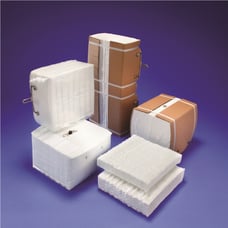 Repeated thermal cycling may cause dimensional changes or cracking. High-velocity gas flow can contribute to erosion, while chemical exposure may cause material degradation. Mechanical stress and improper installation can also reduce insulation effectiveness.
These conditions can lead to increased heat loss, more frequent maintenance, or premature material replacement.
Identifying the likely failure mode before selecting insulation helps narrow the options and determine which characteristics matter most.
For example, an application experiencing frequent temperature changes may require greater thermal-shock resistance, while equipment exposed to abrasive conditions may prioritize material strength and erosion resistance.
Matching Products to Operating Conditions
High-temperature insulation products are available in several forms, each offering different performance characteristics.
Ceramic Fiber Blankets
Products such as Fiberfrax® Durablanket® provide flexible, lightweight insulation for a range of industrial heating applications. Blankets can be useful where low heat storage, flexibility, and thermal efficiency are important.
Ceramic Fiber Boards
Rigid products such as Fibermax® Duraboard® offer insulation options for applications requiring dimensional stability, physical strength, or resistance to mechanical stress. Different grades provide varying density and temperature characteristics.
Ceramic Fiber Modules
Anchor-Loc® module systems provide lining solutions for furnaces and other heat-processing equipment. Module design, anchoring requirements, and operating conditions influence product selection.
Ceramic Fiber Papers
Fiberfrax® ceramic fiber papers can support applications such as high-temperature gasketing, part separation, and refractory backup insulation. Specialized grades are available where binder content or temperature capability is an important consideration.
Additional materials, including refractory brick, castables, coatings, and specialty insulation products, may be required depending on the application.
No single product is the right solution for every operating environment.
Consider Installation and Maintenance
Material selection influences what happens after the product is delivered.
Equipment geometry, installation access, fabrication requirements, and maintenance schedules can influence which product form is most practical.
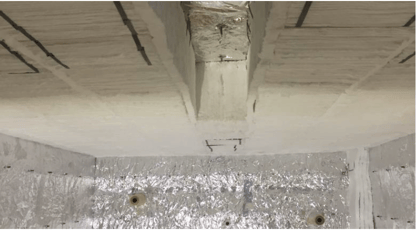 For example, complex equipment shapes may require fabricated components or flexible materials, while applications involving physical loading may require more rigid products.
Complex equipment geometry, limited access, installation requirements, and scheduled maintenance intervals can affect which product form is most practical.
A material that performs well thermally may still create challenges if it is difficult to install, fabricate, inspect, or replace.
Evaluating these factors during selection can help reduce unnecessary installation work and maintenance complications.
For operations working around planned shutdowns or tight maintenance windows, product availability and fabrication requirements are also important considerations. This is where product knowledge and engineering support become important.
Application Knowledge Makes the Difference
Chiz Bros. works with customers to evaluate the operating conditions behind their refractory and high-temperature insulation requirements and selecting the appropriate material.
Through its experience with ceramic fiber blankets, boards, modules, papers, refractory brick, castables, coatings, and specialty products, Chiz Bros. can help narrow material options based on temperature, thermal properties, exposure conditions, and installation needs.
Engineering support, custom fabrication capabilities, and stocked inventory provide additional flexibility when projects require specific dimensions, product forms, or delivery schedules.